
What to Put in a Newborn Memory Book Besides Photos
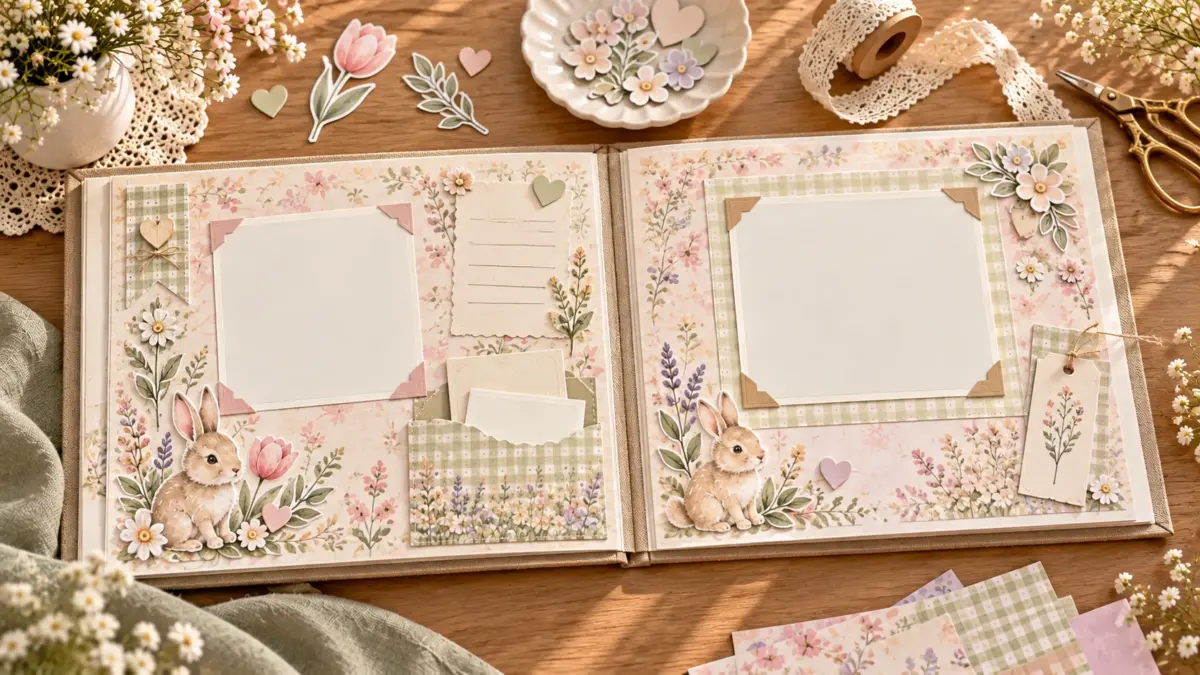
A newborn memory book can hold much more than photographs. Add short notes about everyday routines, family messages, a copy of an invitation or announcement, tiny observations and keepsakes stored in removable pockets. These details give context to the pictures and can be easier to gather than a large collection of decorations.
Choose only what feels meaningful and comfortable to preserve. You do not need to record every milestone or include private information. The suggestions below are prompts, not a required checklist.
Small details that bring a photo back to life
Photos show what a moment looked like; a few words can preserve what surrounded it. On a caption card, record the month, place, people present and one detail you might otherwise forget. This could be a repeated lullaby, the name of a favorite blanket, a funny sound or how the family arranged a daily routine.
If you are not sure of an exact date, use a month or broad timeframe. Do not guess just to fill a line. A phrase like “first week at home” can be more honest and useful than a precise date you cannot confirm.
Short observations also work well: “the afternoon light came through the nursery window” or “everyone took turns holding the new blanket.” Keep the note in your own voice. It does not need to read like a formal milestone record.
Notes from family and friends
Save a few welcome messages, handwritten notes or words from relatives. A baby shower guest book can become part of the memory book, or you can invite close family to write a short card later. Ask for a wish, favorite family tradition or a note for the child to read in the future.
Keep the prompts simple and give people the option to skip a question. Some relatives may prefer a short greeting; others may write a longer story. Use loose cards or a pocket if you want to keep the notes removable. Before sharing any page publicly, consider whether the person who wrote it expected the message to remain private.
Paper keepsakes and copies
Possible additions include a copy of a birth announcement, invitation, welcome card, small drawing, gift tag or a paper label from an item that matters to your family. These are examples, not a checklist. Choose items that are flat enough for the album and do not create bulky layers that strain the binding.
For originals that could tear or fade, make a copy or keep the item in a removable pocket. Avoid gluing irreplaceable papers directly into a scrapbook. If a keepsake is not paper, photograph it and include the picture instead. This preserves the memory without forcing a bulky object into the book.
Do not include documents that expose information you would not want others to see, such as addresses, account numbers or medical details. A family keepsake can be personal without including sensitive records.
Routines, sounds and firsts
Some of the most distinctive memories are ordinary. Write down a routine that helped the family through a busy day, a sound the baby made, a favorite view or the way a sibling greeted the baby. If you want to record “firsts,” use the ones you personally observed and can describe accurately. There is no need to create a long formal list.
A small timeline can help organize notes: “home,” “first family visit,” “favorite song,” “first trip.” Leave space to add details later. You can also make a page called “things we want to remember” and write a few short entries over time.
How to collect ideas without creating extra work
Keep a running note on your phone or in a small notebook. Write fragments when something stands out and sort them when you assemble a page. A few words are enough to trigger a fuller memory later. If several family members contribute, label who wrote each note and when, if they are comfortable with that.
At the end of a week or month, select only a handful of notes. The book is not a transcript of family life. Choose details that add context to the photos, reveal a routine or capture a voice. You can save other notes separately if you want a larger archive.
Arrange the page so words remain readable
Make a simple layout with a photo, a caption card and one keepsake or pocket. Leave a margin near the binding and make sure the pocket flap does not cover writing. Use a pen and paper combination that remains legible; test ink on a scrap if the paper has a coating. Keep busy patterns away from small handwriting.
If you print a decorative background, check its dimensions and fit before printing. A printed panel can frame the photo while a plain note card provides space to write. Product files vary, so confirm the exact contents and terms before using any digital paper. A simple piece of cardstock and handwritten title are enough if no printable is needed.
One simple two-page welcome spread
For a concrete starting point, use one spread for a few words and one saved paper item. On the left page, place a photo with an approximate caption such as “First week at home,” if that timing is right. Add a month or another timeframe only if you can confirm it. On the right, write a short welcome note or tuck a copy of a welcome card into a removable pocket. Keep an irreplaceable original separately if you want to protect it.
On a blank card, try: “One little thing we noticed this week was…,” “One family tradition we hope to share with you is…,” or “Our wish for you is….” Finish one in your own words; a sentence or two is enough.
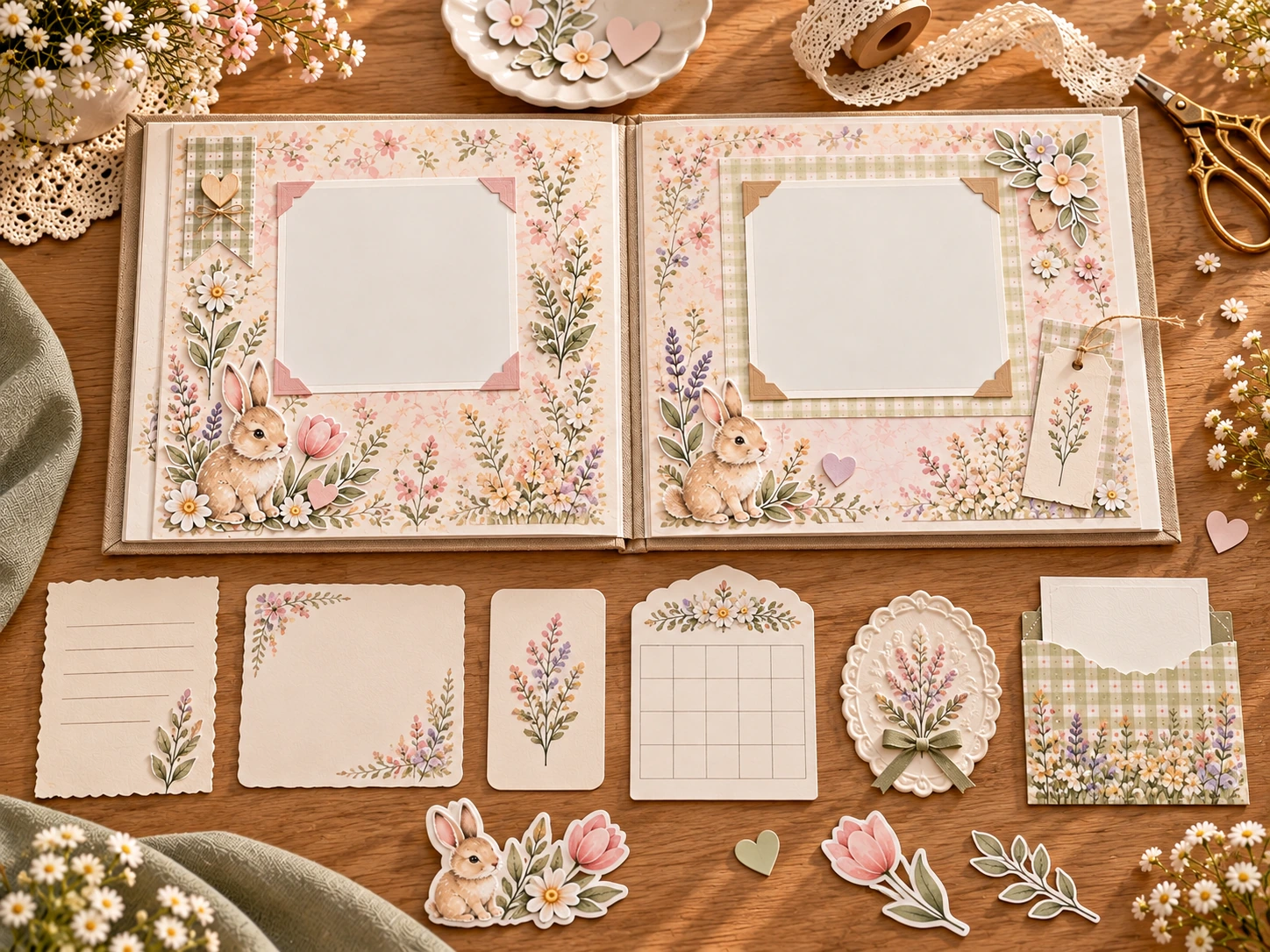
A gentle keepsake checklist
Use these as optional ideas:
- A short note about the baby’s first days at home.
- A caption explaining who appears in a photograph.
- A family message or baby shower card.
- A copied invitation, announcement or gift tag.
- A note about a routine, sound or small habit.
- A removable pocket for flat paper keepsakes.
- A page of memories contributed by relatives.
Choose a few rather than trying to include them all. A book with room to breathe is easier to browse and safer for loose items.
FAQs
What are good things to write in a newborn memory book?
Write brief, specific observations: who was there, what routine mattered, a favorite sound or a detail about the setting. Use dates only when you know them.
Should I include original cards or documents?
Use a copy or removable pocket for items that could be damaged. Avoid permanent adhesive on keepsakes you want to preserve.
What if I do not remember much from the newborn period?
Use photos, messages and notes from people who were there to prompt broad memories. Label uncertain details as approximate rather than inventing a precise account.
How can I make room for keepsakes without a bulky book?
Include copies or photographs of objects, and keep only a few flat items in a shallow pocket. Store larger items separately.
Can family members contribute after the baby is born?
Yes. Ask for a short note, tradition or wish. Loose cards make contributions easy to add later.
Is it okay to leave blank pages?
Yes. Blank space lets you add memories later and keeps the album from feeling crowded.
Related links
For a broader album structure, see the live Baby’s First Year Memory Book page plan. A guest’s note can also be included using the existing Baby Shower Guest Book Journal Kit US sample; check its page for current details and terms.
Image note: the memory-book scenes in this guide are illustrative AI-generated mockups created with ImageGen using the approved ScrapBujo baby scrapbook style as a visual reference. They show possible page arrangements; they are not photographs of a family album, real documents or a downloadable template.
Explore ScrapBujo digital collections
Digital paper collections for your next project
Explore coordinated digital collections on ScrapBujo, compare formats, and follow the checkout shown for the product you choose.
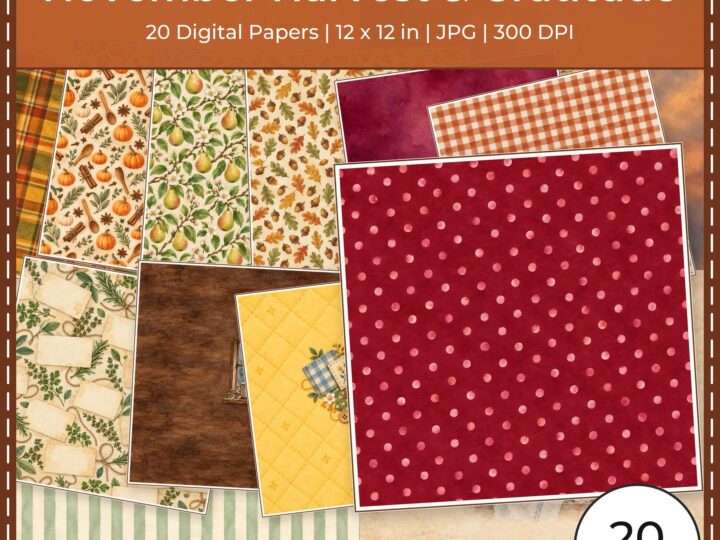
12×12 in 300 DPI Digital download
Digital Scrapbook Papers
November Harvest Gratitude Digital
Explore 20 coordinated digital scrapbook papers from the ScrapBujo November Harvest Gratitude Digital…

300 DPI Digital download
Digital Scrapbook Papers
Ratoncito Perez Tooth Fairy
Explore 111 US Letter JPG scrapbook papers and 20 transparent PNG cliparts from…

12×12 in 300 DPI Digital download
Digital Scrapbook Papers
Equestrian Horse Barn Life Scrapbook
Explore 50 coordinated digital scrapbook papers from the ScrapBujo Equestrian Horse Barn Life…
Each product page identifies its checkout, current price, and digital delivery details.