
Family History Journal Pages: What to Record Before Relatives Forget

Quick answer: a family-history page that distinguishes what was remembered, what was documented and what still needs checking
Editorial note: This guide is based on the current ScrapBujo catalog and practical craft-planning principles. The featured image is an AI-assisted editorial mockup built from the actual collection previews shown below; it is not presented as a photograph of a completed print test.
Who this helps
This plan is for anyone making a family-history page from a conversation, photograph or document and wanting a future reader to see what supports each detail. It is a recordkeeping aid, not a method for proving a family story.
Make one source card per person or event
Use a separate card or note for each account so sources and uncertainties do not blur together:
- Person or event: ____________________
- Date or approximate period: ____________________
- Record, photograph or speaker: ____________________
- Exact words or paraphrase: ____________________
- What this source directly supports: ____________________
- Uncertain or conflicting detail: ____________________
- Follow-up question and who to ask: ____________________
For a conversation, identify the person who told you and when you made the note. For a document or photograph, describe the item so you can locate it again.
Separate what is known from what is remembered
Write what a document shows separately from what someone recalls. Put quotation marks around wording only when you recorded it as spoken or written; otherwise label the note as a paraphrase. If a date or spelling differs between accounts, keep both versions with their sources and mark the conflict for follow-up. Do not resolve a disagreement by choosing the version that looks most plausible.
Keep the page traceable
On the journal page, pair the person or event with a brief source label, such as “conversation with [name], [date]” or a description of the record. Keep original photographs and documents in their existing safe place; use a copy or a written description for the scrapbook. The decorative page can point back to the source without becoming the only copy.
Check the page and file format
Before finishing, confirm that a reader can tell which statements are documented, which are remembered and which need checking. Confirm the selected paper size in the live collection details and listing before buying or printing. If printing, colors and scale can vary with the screen, printer, paper and settings, so check one page before laying out a larger set.
Mini FAQ
Who provided this detail?
Name the speaker or identify the record beside the note. If someone repeated a story but cannot identify its original source, record that path and mark the original source as unknown.
What if two sources disagree?
Preserve each version with its source and write a specific follow-up question. The page can show that the detail is unresolved instead of presenting one account as settled fact.
Should I write on an original photograph or document?
Keep the original separate and unaltered. Put the source label in your journal or on a removable note so the page remains traceable without changing the source item.
Collection previews used in this guide
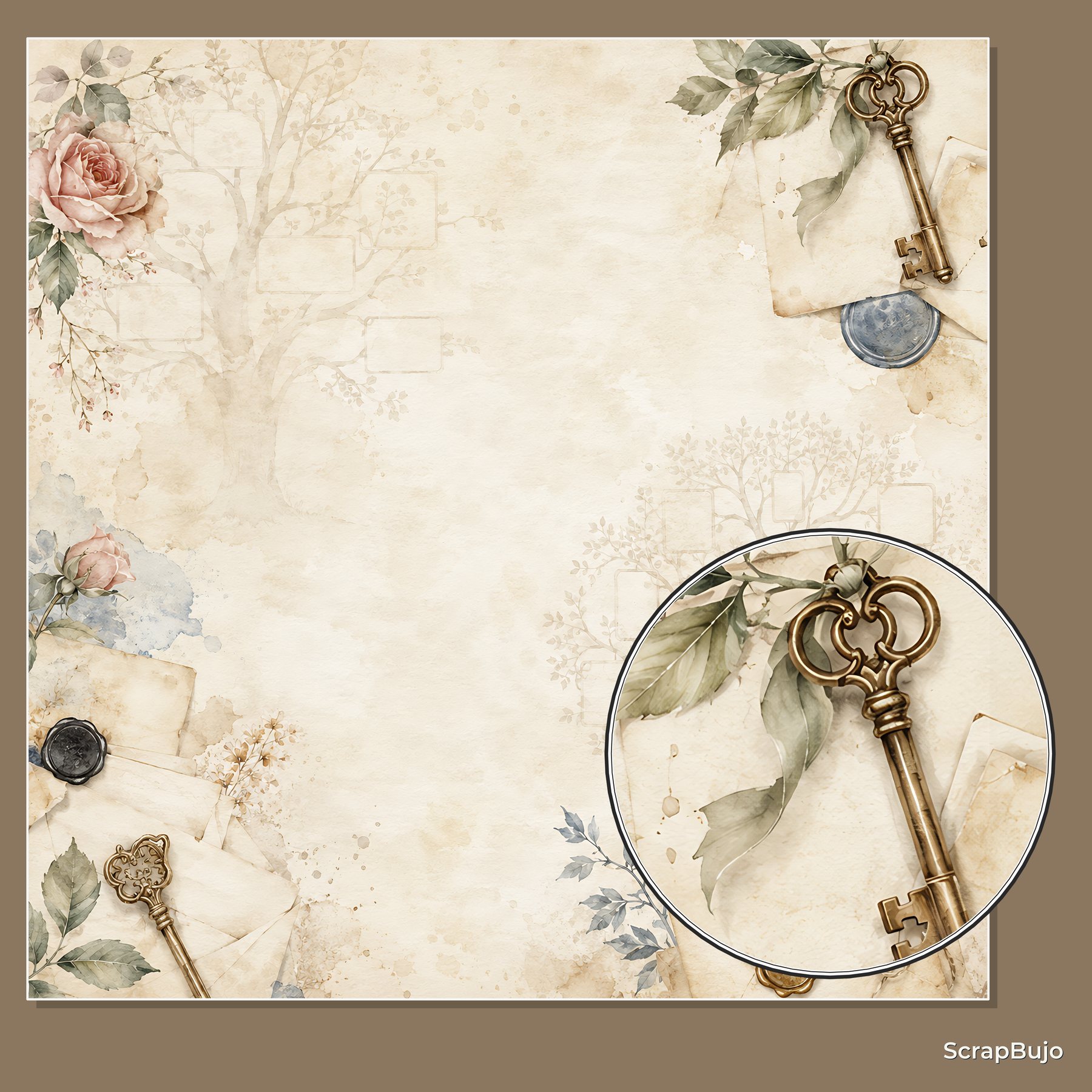
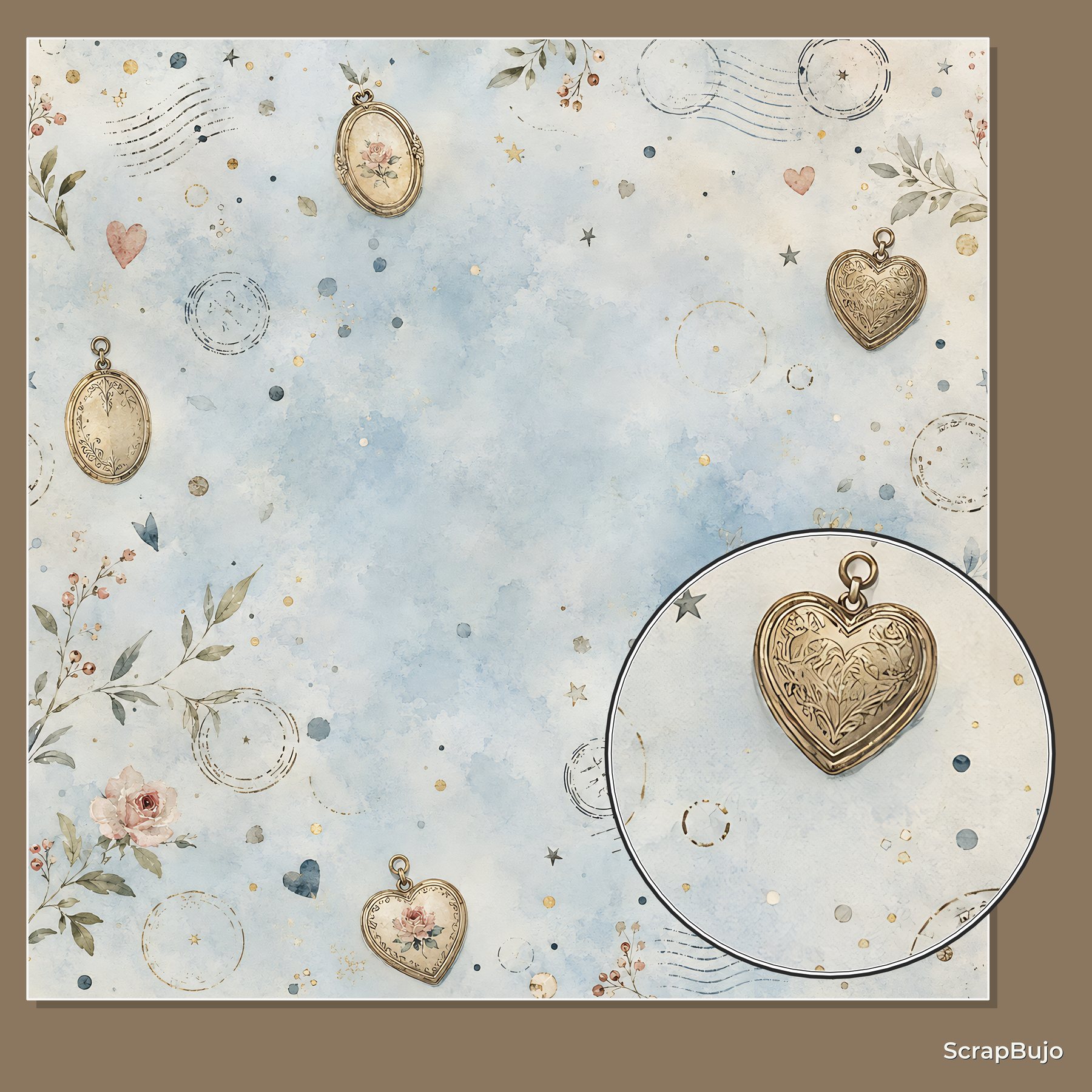
These are current ScrapBujo collection previews, not substitute artwork. They show the paper surfaces and formats discussed below.
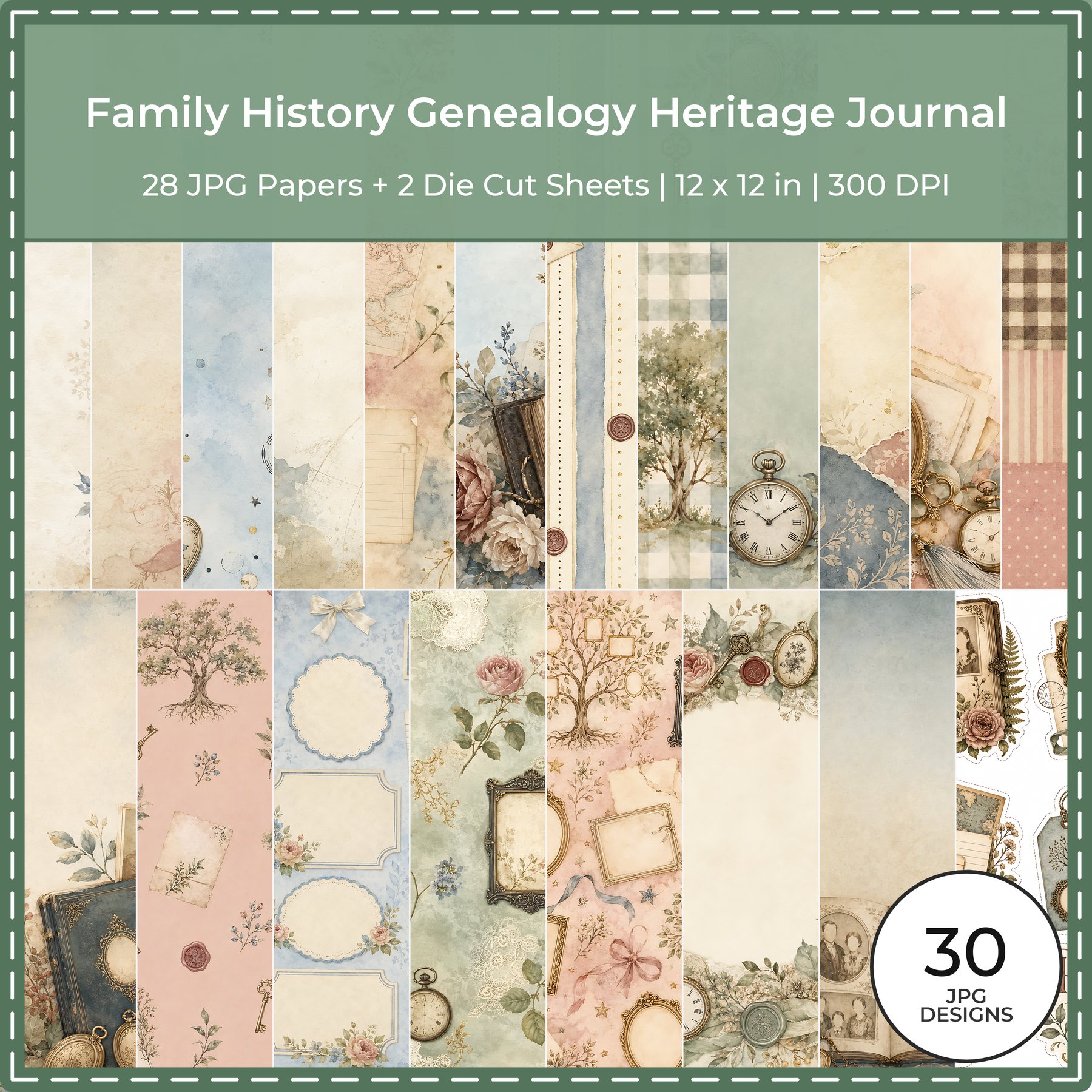
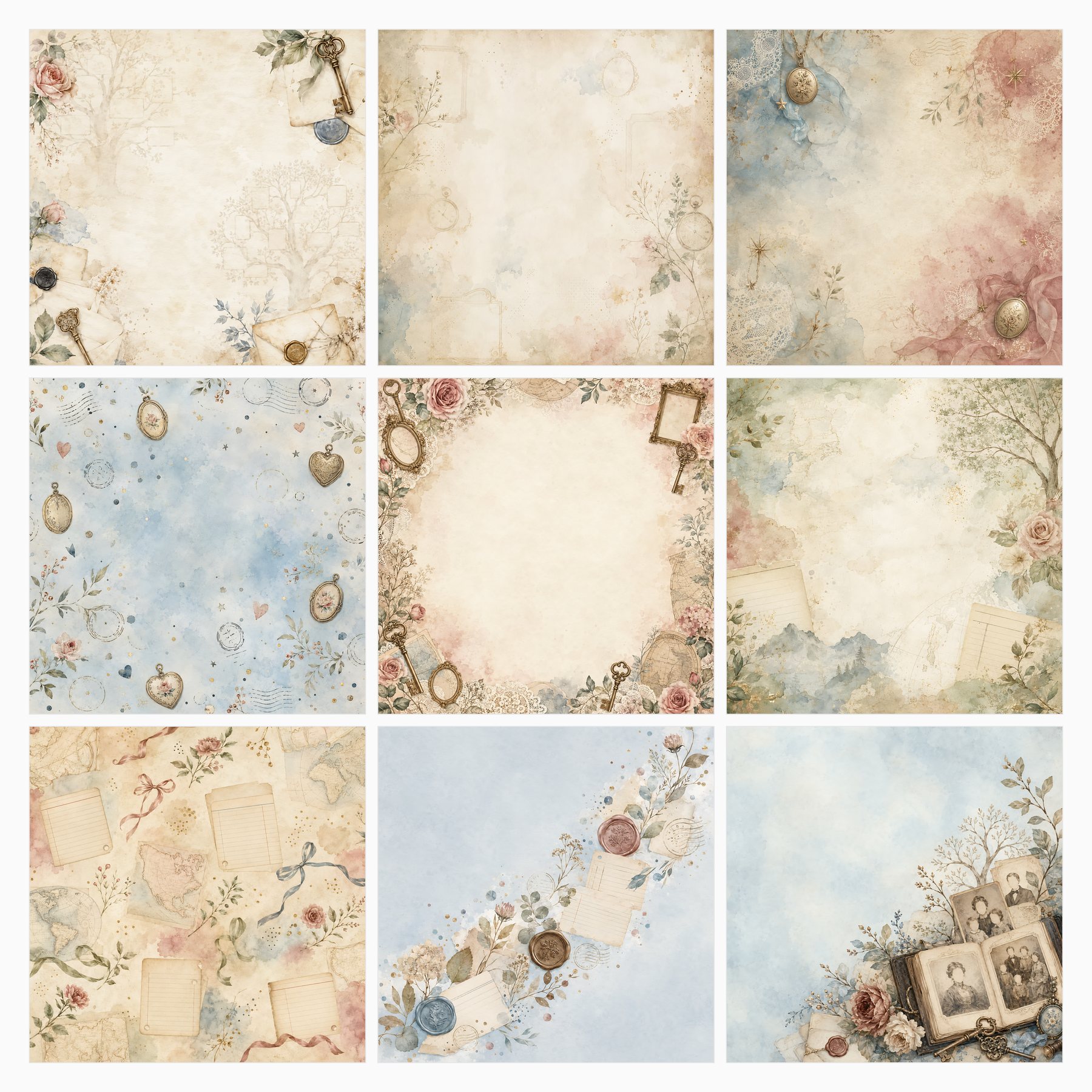
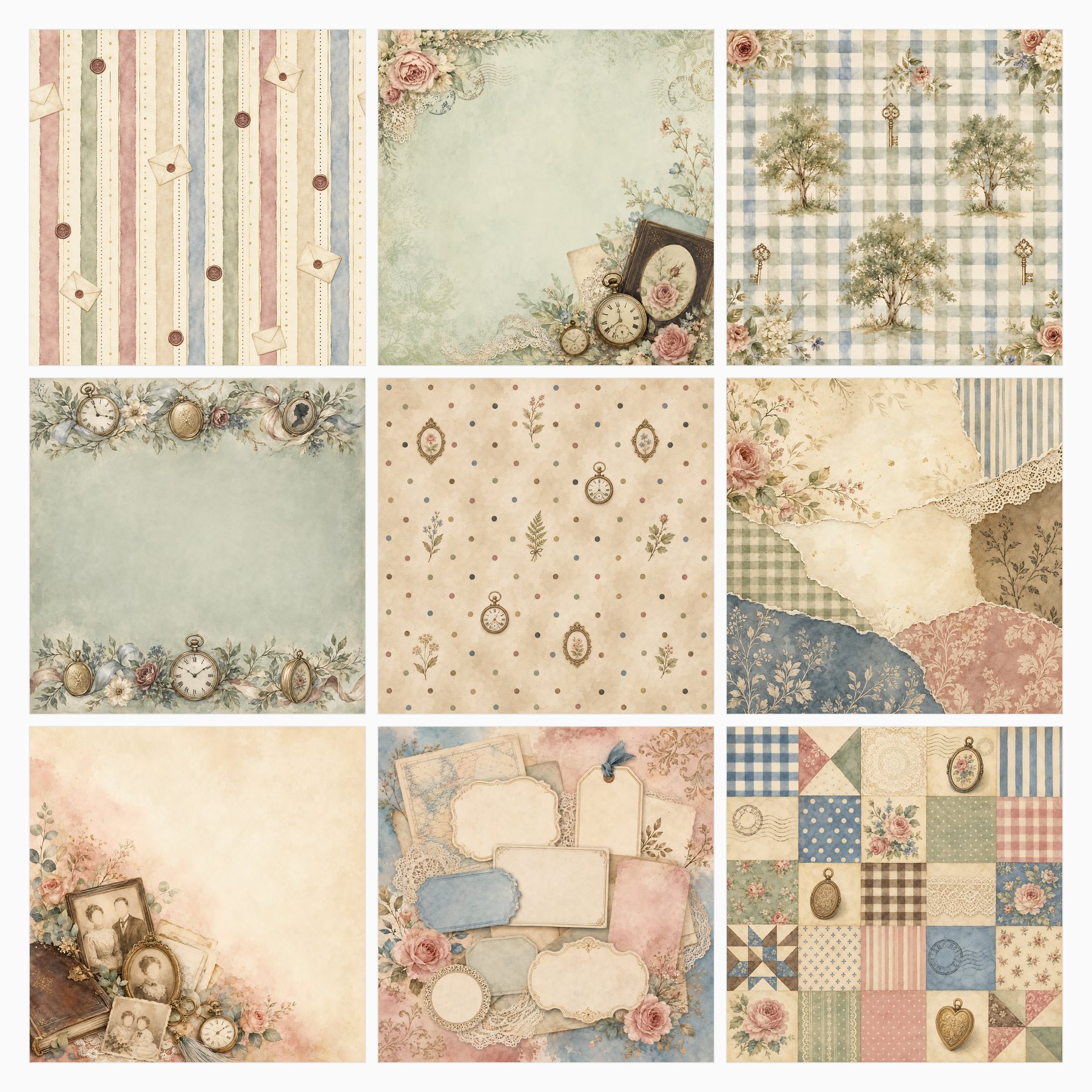
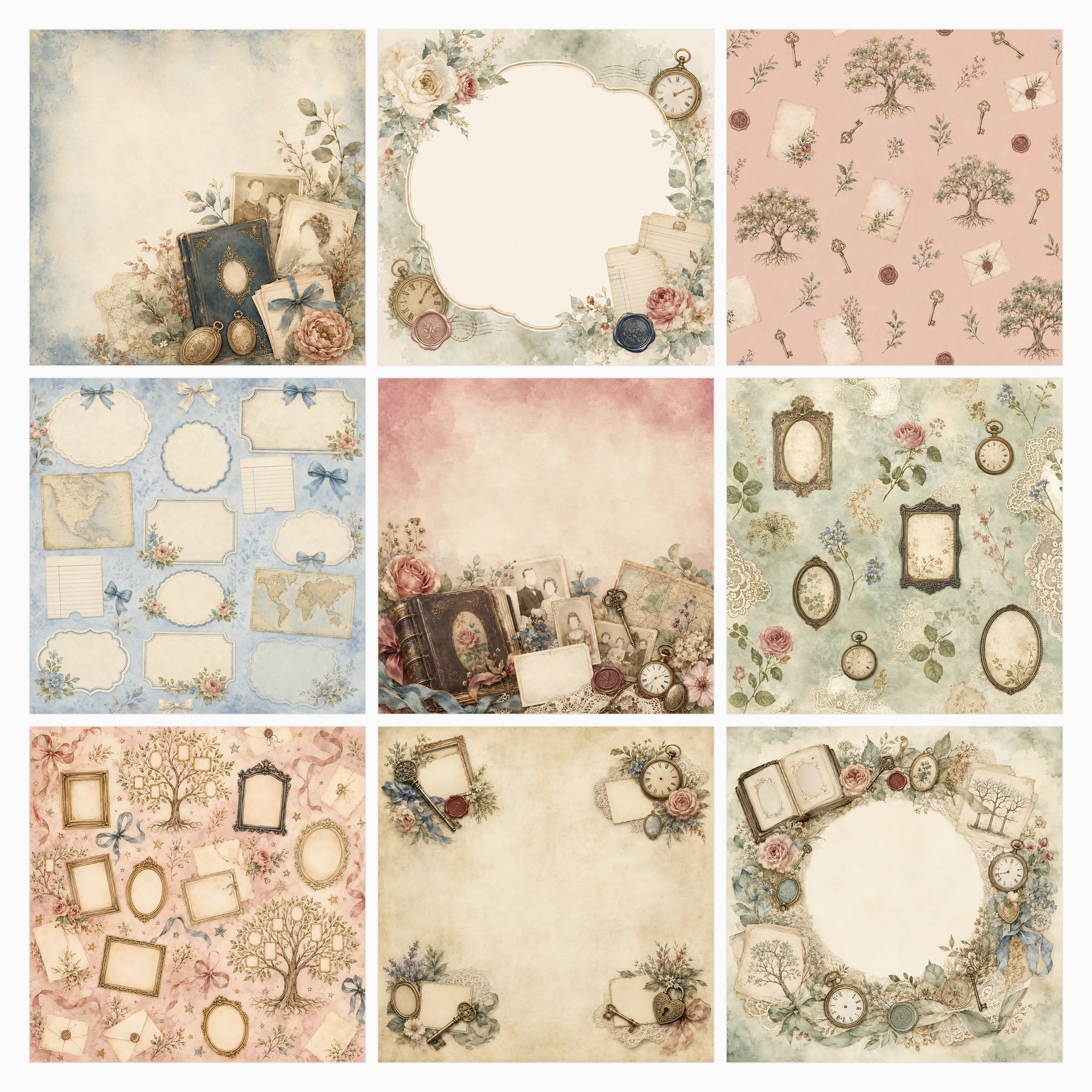
Related free samples: Browse free printable samples before choosing a full pack.
Explore ScrapBujo digital collections
Explore the related digital collection
Review the collection previews and current file details before choosing a format.

12×12 in 300 DPI Digital download
Digital Scrapbook Papers
Family History Genealogy Heritage Journal
Create family-history pages with 28 square JPG papers and 2 printable JPG die-cut…
Each product page identifies its checkout, current price, and digital delivery details.