Grandma’s Recipe Cookbook: Turn Family Instructions Into a Keepsake

Start with one handwritten recipe. Keep a clear copy of both sides, add a readable transcription, and give the family story its own space. That way, the handwriting stays part of the keepsake and the next person can find the instructions.
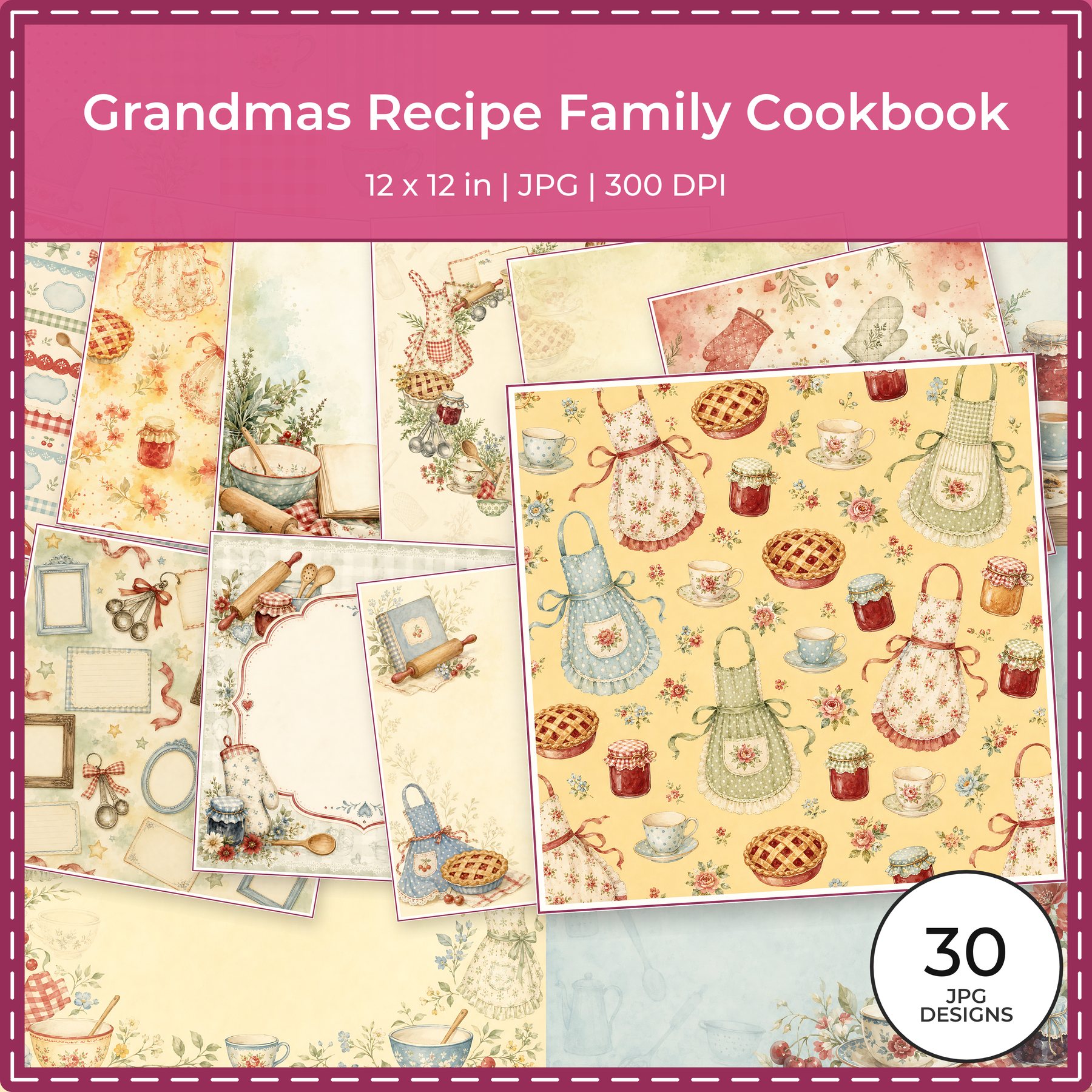
About this guide: The page plan below is an editorial suggestion, not a supplied recipe template or a physically tested album. The featured image is an AI-assisted mockup using the collection previews.
Keep the original card and the scrapbook page separate
A decorative recipe page and storage for an irreplaceable card do different jobs. Make the page with a reproduction, especially if the original is fragile or someone still needs it for cooking. The National Archives article on preserving family recipes explains careful handling, protective storage and scanning so originals can stay in storage while copies are used.
Digital paper is a background design. Printing a design does not establish that the resulting paper, ink, adhesive or sleeve is suitable for preserving an original. For storage materials and mounting choices, consult the National Archives family-paper storage guidance.
Gather these five things for your first recipe page
- A copy of the front and back of the recipe card, including notes in the margins.
- A transcription you can check against that copy.
- The name of the person who wrote or shared it, if known.
- One short memory or a photograph you have permission to use.
- Your chosen album page size and a plain area for readable text.
Choose your album or binder format before printing the background. A square paper design can be used as an accent on a rectangular page; it does not have to fill the whole sheet. Our 12×12 printing guide covers printer and print-shop choices.
For creative layouts and family-memory prompts, use our eight family recipe journal page ideas. Here, the focus is on keeping the inherited source identifiable and separate from later changes.
Choose a format for how you’ll use the recipes
For cooking, choose a binder or album that keeps recipes accessible and leaves room for notes; a family keepsake can also include photos and stories. In a closed January 2012 Scrapbook.com thread, contributors shared personal examples, not a sizing rule: one used an 8.5 × 11-inch album for a 75-page heritage recipe book and valued the room for photos, stories, and recipes, while another preferred 8 × 8 and found 8.5 × 11 too large. Other contributors described 12 × 12 family-memory layouts they did not use for cooking, and 4 × 6 recipe cards bound with a single ring, which one said was less sturdy. For originals handled during cooking, follow the National Archives guidance linked above: use protective polyester sleeves and consider scanning a copy for everyday use.
Keep three parts of the recipe record separate
Page one: the handwriting and its story
Place the card reproduction where its writing can be read without covering it with decoration. If the back has instructions, include a second reproduction rather than hiding it. Below the card, write who it came from, how you received it and when your family remembers making the dish. Leave an unknown date unknown.
Page two: a transcription and separate cooking notes
Type the recipe as written, including its quantities and order. Mark a word you cannot read with “[unclear]” instead of silently guessing. Put questions for a relative in a separate list. Then reserve another block for later notes: when you made it, what you changed and what happened. Do not present an untried adaptation as the original recipe.
This separation helps when different relatives remember different versions. Keep the card image, record each person’s contribution by name and label your current working version. A decorative layout cannot resolve missing cooking instructions.
What to record beside each recipe
- Recipe name
- The name on the card, plus a family nickname if useful.
- Source
- Who wrote it and who gave you this copy. If those are different people, record both.
- Date
- The written date, or “date unknown.” Keep your scanning or transcription date separately.
- Family memory
- A short account of the occasion, person or place connected with it.
- Open questions
- Unreadable words, missing quantities or unfamiliar measures to check.
- Your later notes
- Dated changes and observations, clearly separated from the inherited wording.
Example prompts, not a family testimonial: “Who usually made this?” “Was it saved for a particular holiday?” “Is there a note on the back?” These are questions you can ask, not details to invent.
Make the text readable before adding more paper
Place ingredients and instructions on a plain block, with the patterned paper around it. Print one working copy at the intended size and read every quantity and line break. If a recipe needs more room, use a continuation page with the recipe name and page number. Shrinking everything to fit can leave you with a pretty page that is awkward to use.
For a long book, choose one navigation system: dish type, family branch or occasion. Add an index with recipe names and page numbers. Cross-reference a recipe that fits more than one category instead of making conflicting copies.
Questions about handwritten recipe scrapbooks
Who provided the recipe?
Record the writer when known and the person who passed it to you. If you only know that it came from a family recipe box, say that. The paper collection or Etsy listing cannot tell you a recipe’s family source.
What if I cannot read the handwriting?
Keep the image alongside your transcription, mark uncertain words and ask someone familiar with the writer’s handwriting. Save corrections with the contributor’s name. Do not replace an uncertain quantity with a confident guess.
How can I keep the handwriting if the card background is dark or stained?
Keep an untouched scan or photograph, then edit a duplicate. A gentle Levels adjustment can change brightness and contrast; the guide explains the controls. Compare the edited copy with the untouched image while checking pale pencil, small quantities and letter edges, and ease off if any mark becomes harder to read. The GIMP Threshold tool turns the image black and white: pixels inside the selected range become white, and pixels outside it become black. This removes anti-aliasing, the soft edge tones around strokes. GIMP’s guide says to use Levels instead if that loss poses a problem. For recipe-card scans, we suggest trying a gentle Levels adjustment on a copy and checking it against the untouched scan, since faint marks and letter edges can matter. This is our practical application of that general guidance to recipe-card scans. A contrast adjustment may help distinguish some writing from a dark background, but it cannot recover marks the image does not show. Label the adjusted file so it is not mistaken for the original.
Should I attach the original card to the page?
Use a reproduction for the decorative page when preserving the original matters. Follow the linked National Archives guidance for storing the original; the background papers shown below are not a preservation system.
Can I use a binder and protect a recipe while cooking?
If you want pages you can rearrange or add to over time, a binder is one personal workflow choice, not a preservation rule. For a recipe used in the kitchen, a National Archives Prologue article suggests a clear polyester film sleeve to help protect it from spills and greasy fingerprints; it also describes a preservation-quality loose-leaf album with polyester page protectors. If your finished scrapbook page is not meant for the kitchen, keep it dry and bring a separate recipe copy to cook from.
Can I make copies for relatives?
A digital copy can make the handwriting easier to share; store the original separately according to the National Archives guidance. Check with the family before sharing personal notes or photographs, and check the exact license for any purchased background designs. Owning a card and having permission to distribute everything on a finished page are separate questions.
Collection previews used in this guide
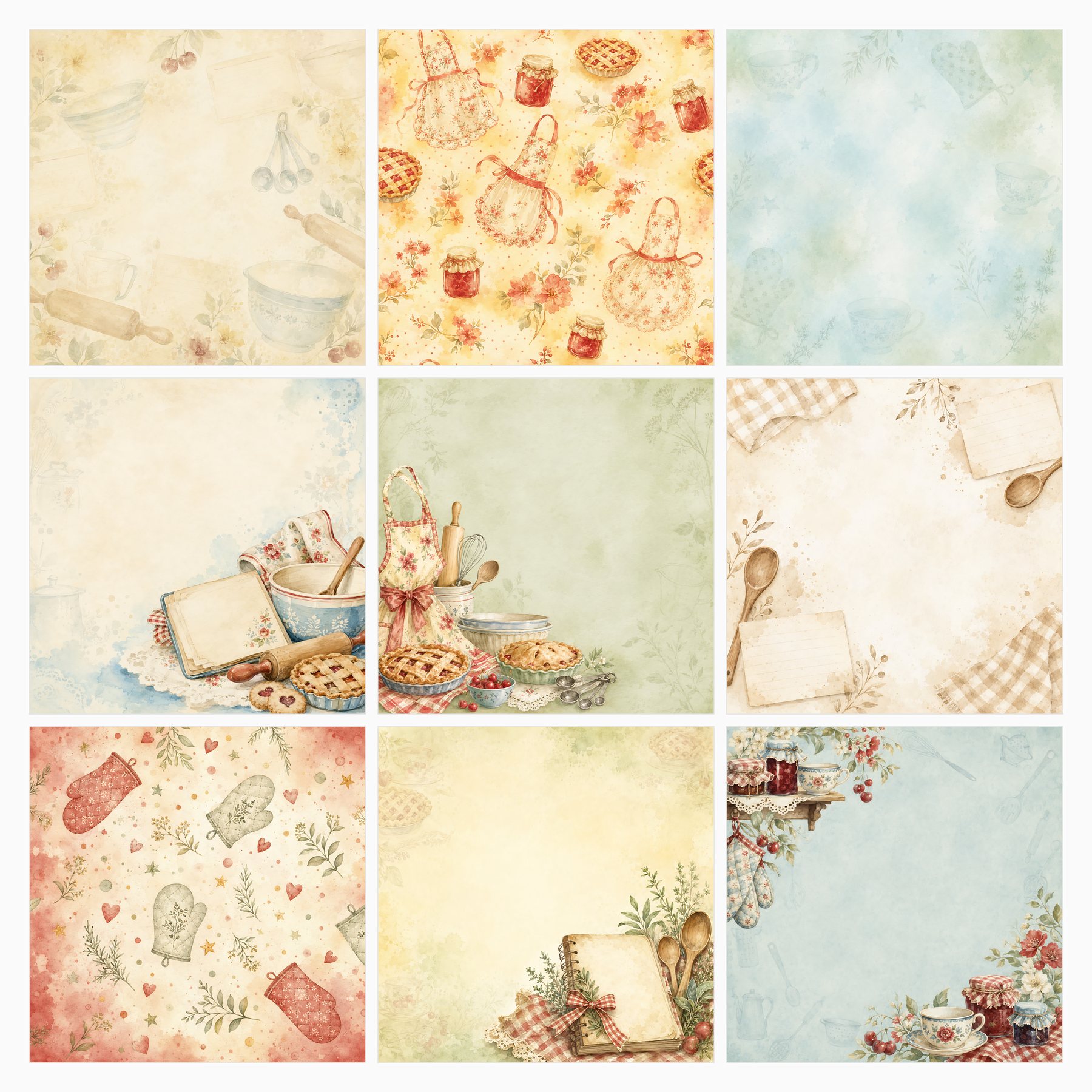
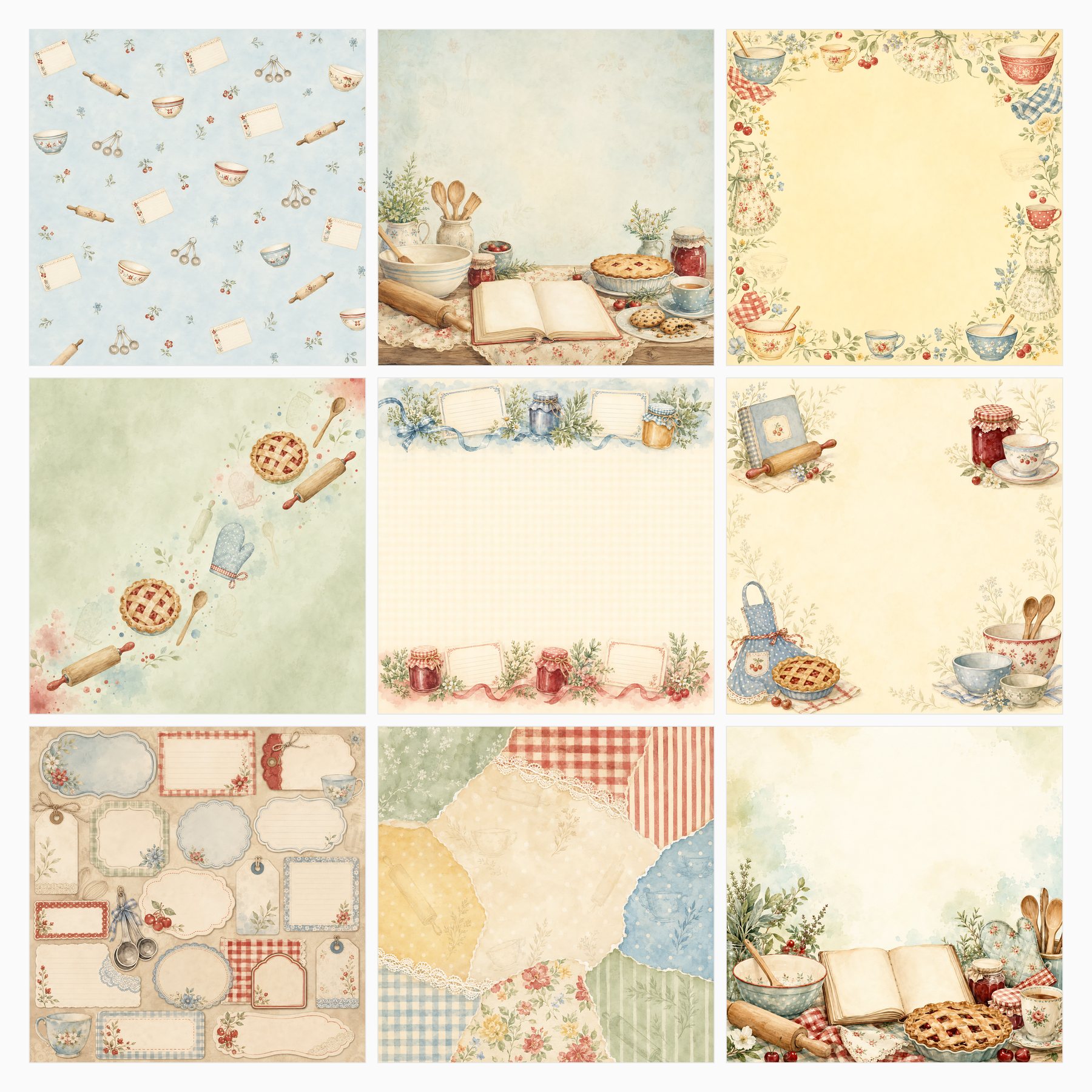
These are current ScrapBujo collection previews, not substitute artwork. They show the paper surfaces and formats discussed below.
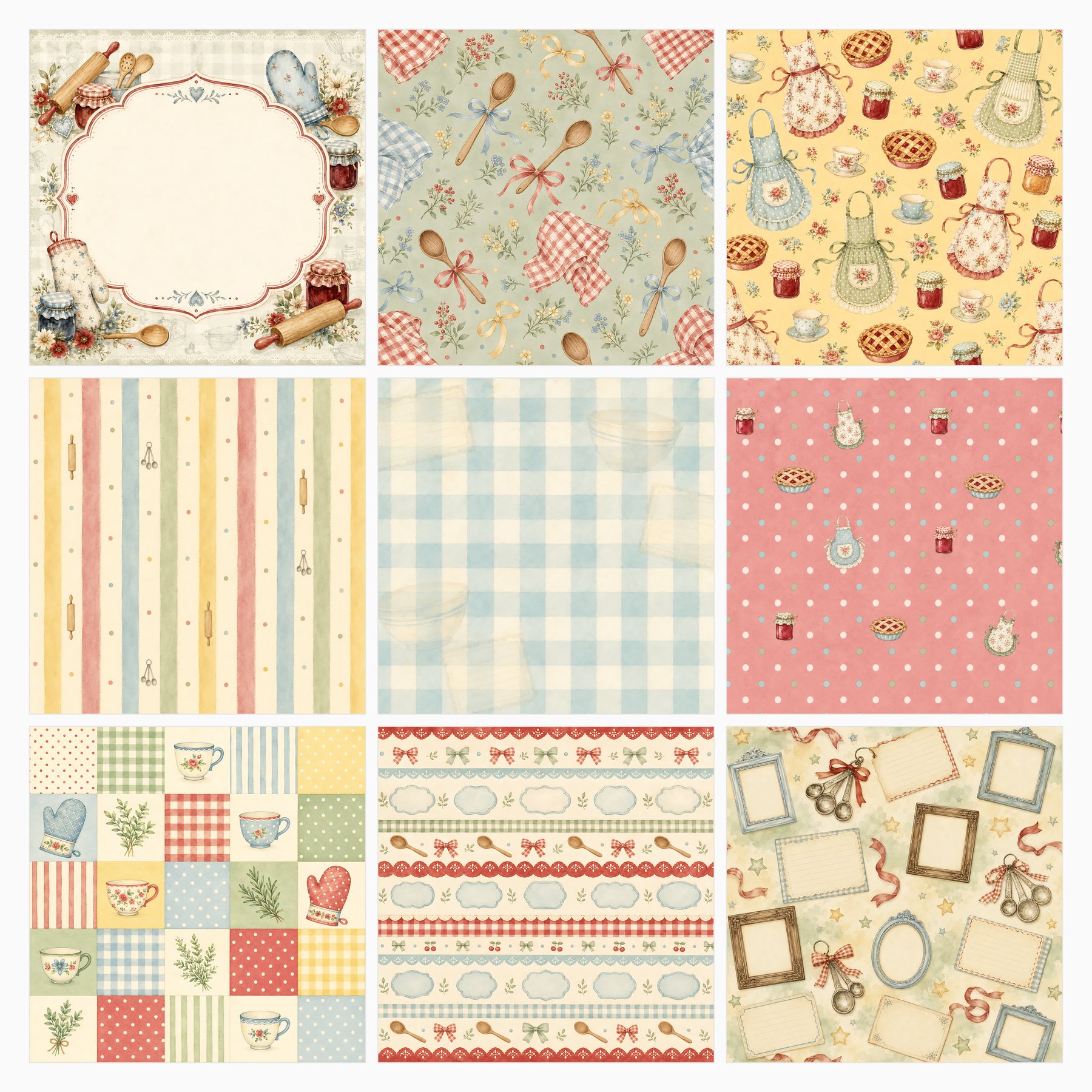
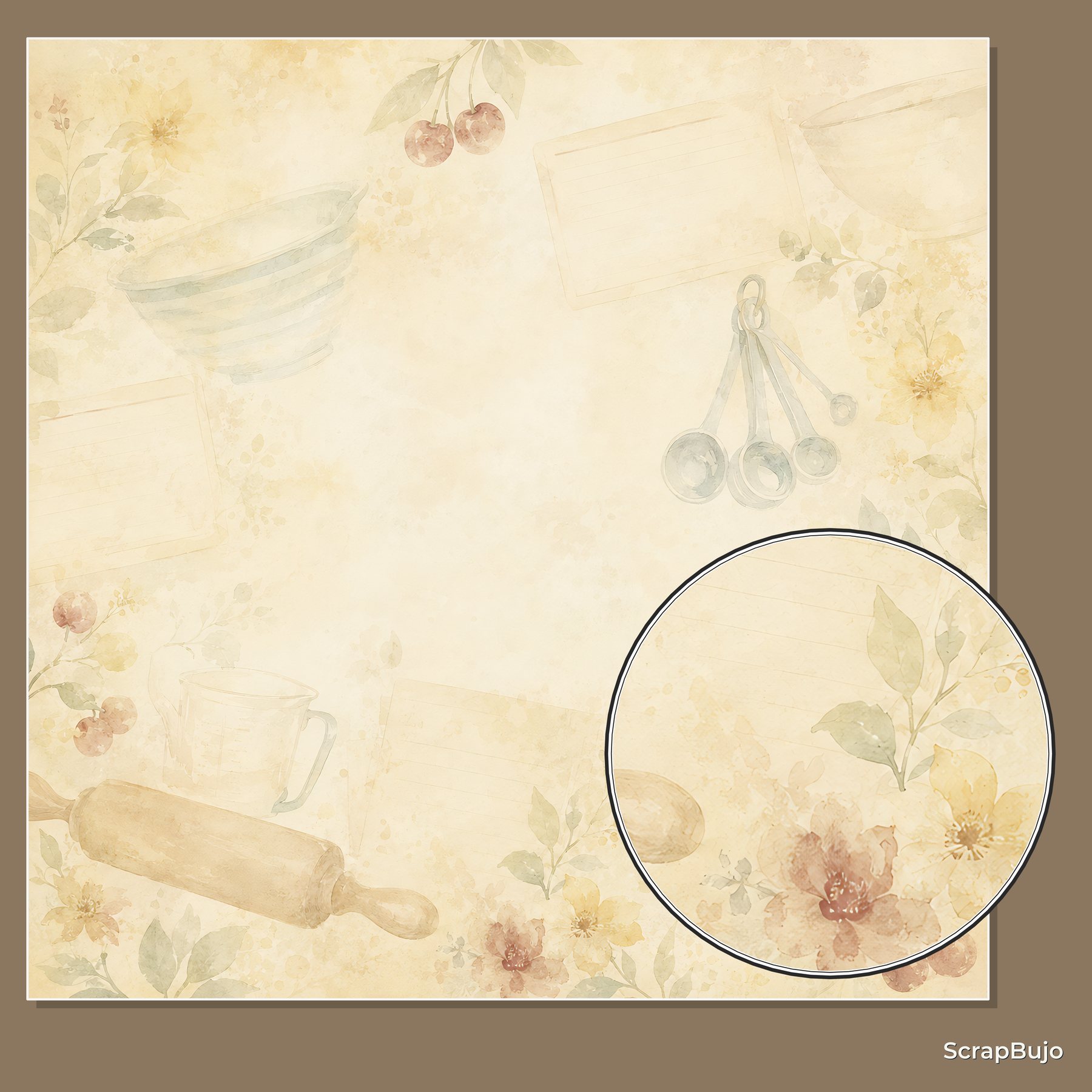
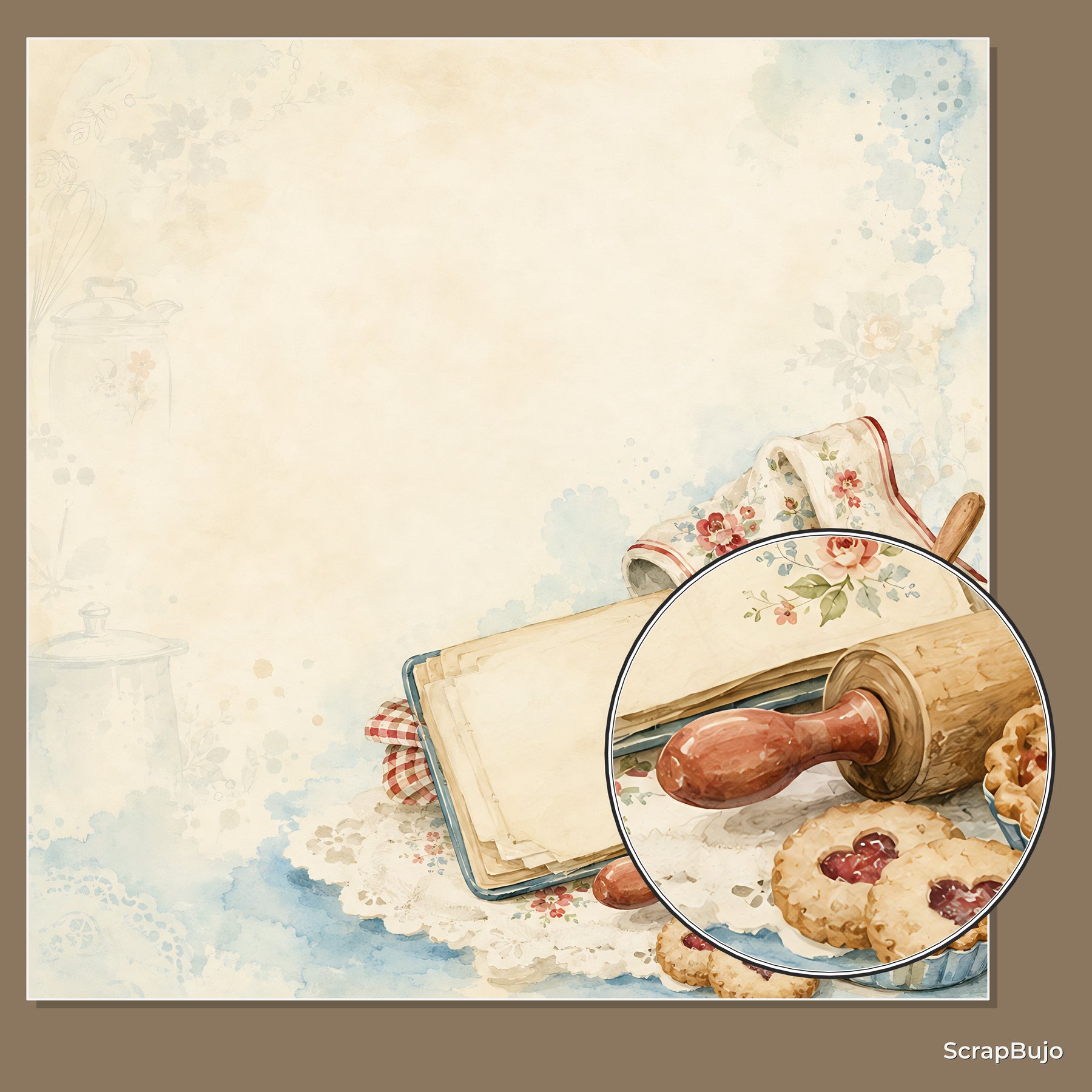
Related free sample: Download the free 3-page Grandma’s Recipe Family Cookbook PDF sample.
Explore ScrapBujo digital collections
Explore the related digital collection
Review the collection previews and current file details before choosing a format.

12×12 in 300 DPI Digital download
Digital Scrapbook Papers
Grandmas Recipe Family Cookbook
Explore the Grandmas Recipe Family Cookbook digital scrapbook paper collection: 28 square 12…
Each product page identifies its checkout, current price, and digital delivery details.