
Japan, Korea and China Travel Ephemera: A Junk Journal System That Stays Usable

Quick answer: give each travel item a date, place, and source note so a ticket or receipt can be found again without forcing every object into the journal.
Editorial note: The featured image is an AI-assisted editorial mockup made from the collection previews below. It is not a photograph of a completed journal or a print test.
Make a small index before you arrange the pages
Travel keepsakes arrive out of order: a ticket from one day, a receipt from another, and a photo saved later. Start a simple index with four fields: date (or “date unknown”), place or route, item type, and where the original is stored. Give each item a short ID such as T01, then write that ID beside the related photo or journal entry. Example only—not a trip record: “T01 | date copied from ticket | confirmed stop: [your actual city/country] | original: envelope 1, pocket 2 | matching photo: P04.” Keep each confirmed country or city in its own index section, and include only stops from your own trip. If the photo and ticket are later separated, the ID still points to the same entry. You can assemble pages after a trip and still connect pieces to the right day.
Record what the item actually says
Copy visible names, dates, and route text exactly when you can read them. If a sign or ticket uses a language you do not know, label it “translation not confirmed” and keep the original wording; do not guess a translation from context. Add a separate note only when you have a reliable source for it. For an item with personal details, make a private copy or cover those details before sharing a page publicly.
Keep oversized pieces retrievable
A large map, receipt, or folded leaflet does not have to fit the journal. Give it an index ID, note its storage location, and add a photo or short description to the page. This makes the page a useful pointer without requiring you to fold or trim an original to fit. The index records where you put an item; it does not guarantee archival protection.
Build one spread from the index
- Choose one day, route, or place.
- Match one photo to the item IDs from that stop.
- Write a short caption with the date, location, and what you remember; mark any uncertain detail as unknown.
- Leave a clear space for the ticket or a note that points to its storage location.
- Only then choose a background or border, keeping the identifying details readable.
For a quieter page composition, see the separate Japanese floral travel journal spread guide. This guide focuses on tracing loose travel objects back to a date and place.
What to do when plans change
If you cannot identify an object yet, enter “date unknown” or “place unknown” and keep its ID. A later photo, calendar, or route note may help; never force an exact day from memory alone. If the photo is missing, keep the item’s index entry and write what is visible on the item itself. Add a photo later only if you find one that matches.
Frequently asked questions
What if I only remember the month, not the travel date?
Record the month and mark the day as unknown. Keep the item ID and add a source note if you later confirm the date from a calendar, itinerary, or dated photograph.
Should I write a translation for a ticket I cannot read?
No. Keep the printed text as it appears and mark the translation unconfirmed. Add a translation later only when you can cite a reliable source.
Collection previews used in this guide
These are current ScrapBujo collection previews, not substitute artwork. They show the paper surfaces and formats discussed below.

Related free samples: Browse free printable samples before choosing a full pack.
Explore ScrapBujo digital collections
Explore the related digital collection
Review the collection previews and current file details before choosing a format.
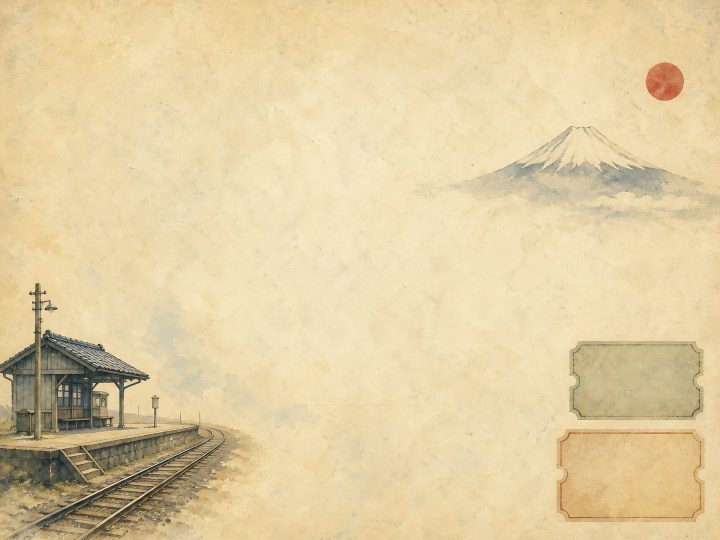
300 DPI Digital download
Junk Journals · Vintage & Cottagecore
Vintage Asian Travel Ephemera Bundle, Japan Korea China Junk
Explore 24 coordinated US Letter digital scrapbook papers from the ScrapBujo Vintage Asian…
Each product page identifies its checkout, current price, and digital delivery details.