Baby’s First Year Memory Book: A Practical Page Plan for Busy Families

Quick answer: A first-year scrapbook can be a small set of pages that tell a few parts of the story. Choose six pages from the plan below, then add one or two only if they would help someone understand the year. One photo, a date or month, and a few words are enough to make a page useful.
A simple six-to-eight-page first-year plan
Think of these as page ideas, not a checklist to finish on a schedule. Pick the six that fit your family and album; the last two are optional.
- Cover page: Add a name or nickname, the year, and one photo or small note about who the album is for.
- Arrival: Choose one photo from the early days and record a detail you want to remember, such as who was there or what the room looked like.
- An ordinary day: Show a familiar routine, favorite place, or quiet moment. Everyday scenes can help the album feel like a real year rather than a list of events.
- People and places: Use one or two photos with family, caregivers, or a place the baby spent time. Add names if they will help the child recognize everyone later.
- A month-by-month page: Make a simple calendar, grid, or row of month labels. You can include twelve small images, a few selected images, or no image for a month when journaling tells the story better.
- Favorites and changes: Collect a few details that changed during the year, such as a favorite toy, sound, routine, or expression. Keep the list short and use only details you can confirm.
- One meaningful first or milestone (optional): Choose a first that matters to your family. It does not need a separate page if a short note fits elsewhere.
- Birthday or closing page (optional): Add a birthday photo, a note to the child, or a sentence about what you want the album to hold.
If you want a repeatable layout for selected months, the monthly milestone page guide shows a simple structure that can be adapted. It is fine to combine months or leave a gap.
Choose photos that carry a story
Start with the moment you want to remember, then choose the photo that helps you recall it. A useful first-year selection might include one clear face, one everyday scene, a photo with another important person, and a detail such as a favorite blanket or tiny shoes. These are options, not required categories.
When several photos show nearly the same thing, keep the one with the expression, background, or small detail that brings the moment back. You do not need the most polished image. A candid photo can work well if the main subject is visible and the image will print at the size you plan to use.
Choosing a 4×6 photo for a ready-made gift page
If a preassembled gift page has a space intended for a 4×6 photo, first check the opening or pocket and whether it is portrait or landscape. Choose a print in the matching orientation with the important faces or detail comfortably inside the edges. A standard 4×6 print has a 3:2 shape; if the photo and opening use different shapes, select a different photo instead of cutting off part of this one.
In the print preview, choose the option that fits the whole photo on the 4×6 sheet, not a fill or crop option. Keep the original image unchanged and check that the preview shows all four edges before printing. Follow the page or album maker’s instructions for inserting the finished print. For paper-format questions, see the US Letter and A4 baby album guide; for material choices, see how to choose paper stock for a baby memory book.
Leave room for the note
Decide what the page needs to say before adding decorative layers. Leave a clear space for a date or month, one short sentence, and any names that provide context. If you are not sure about an exact date, write the month or a broader timeframe instead of guessing.
For a monthly page without a photo, keep the month label and write down one detail that is still clear: a routine, a sound, a place, or something the family talked about. You can also use a small calendar mark or a simple title in place of a photo. If there is no note to add, leave the space open and continue with the next month; you do not have to fill every box.
Try a prompt when the journaling area feels blank:
- What small moment from this month would I like to remember?
- What changed in our everyday routine?
- Who spent time with the baby, and what is one detail about that day?
Choose one question, answer it in a sentence or two, and stop. The baby shower guest-book prompts and page plan offers more question ideas when several people want to contribute a short note.
For ideas beyond photos—such as family notes, copied cards and small keepsakes—see our guide to what to put in a newborn memory book besides photos.
For a removable place to hold a 4 × 6 journaling card, see the printable baby scrapbook pocket template.
Keep milestones from becoming homework
Lists of possible firsts can be helpful for sparking an idea, but they are not a scorecard. Circle only the moments that feel worth keeping in this album. A simple calendar page can hold dates or a few notes without giving every milestone its own layout.
If a milestone has no photo, a brief note is enough. If it does not feel important to your family, skip it. The album can include ordinary routines, people, and small details alongside any big event, and its pages do not have to be equally full.
Make one first page, step by step
- Pick one moment. Choose an event, routine, or small detail you can describe in a few words.
- Select one photo. Favor an image that shows the moment clearly and leaves room for the page you have.
- Write a one-sentence note. Record a confirmed date or month, who was there, and what you want to remember.
- Lay everything out before attaching it. Place the photo, note, and one paper accent on the page. Keep the handwriting area clear and check the album or protector edges.
- Make one adjustment. Remove a layer or move the photo if the page feels crowded. A simple background can make the photo and note easier to find.
- Attach the pieces and reread the note. Check that the date and names are accurate and that the note remains visible in the finished page.
- Save the next idea separately. Put an unfinished note or photo choice in one folder or envelope so the next session can begin without reopening the whole camera roll.
For a one-page example using Baby Bunny paper, see the Baby Bunny memory album page walkthrough.
If you want to see a decorative paper sample before choosing materials, start with the Baby Bunny US Letter sample page and check its current details. The sample is an optional source of paper accents; it is not an album template. If your paper is A4, use the separate Baby Bunny A4 sample page instead.
Collection previews used in this guide
These are current ScrapBujo collection previews, not substitute artwork. They show the paper surfaces and formats discussed below.
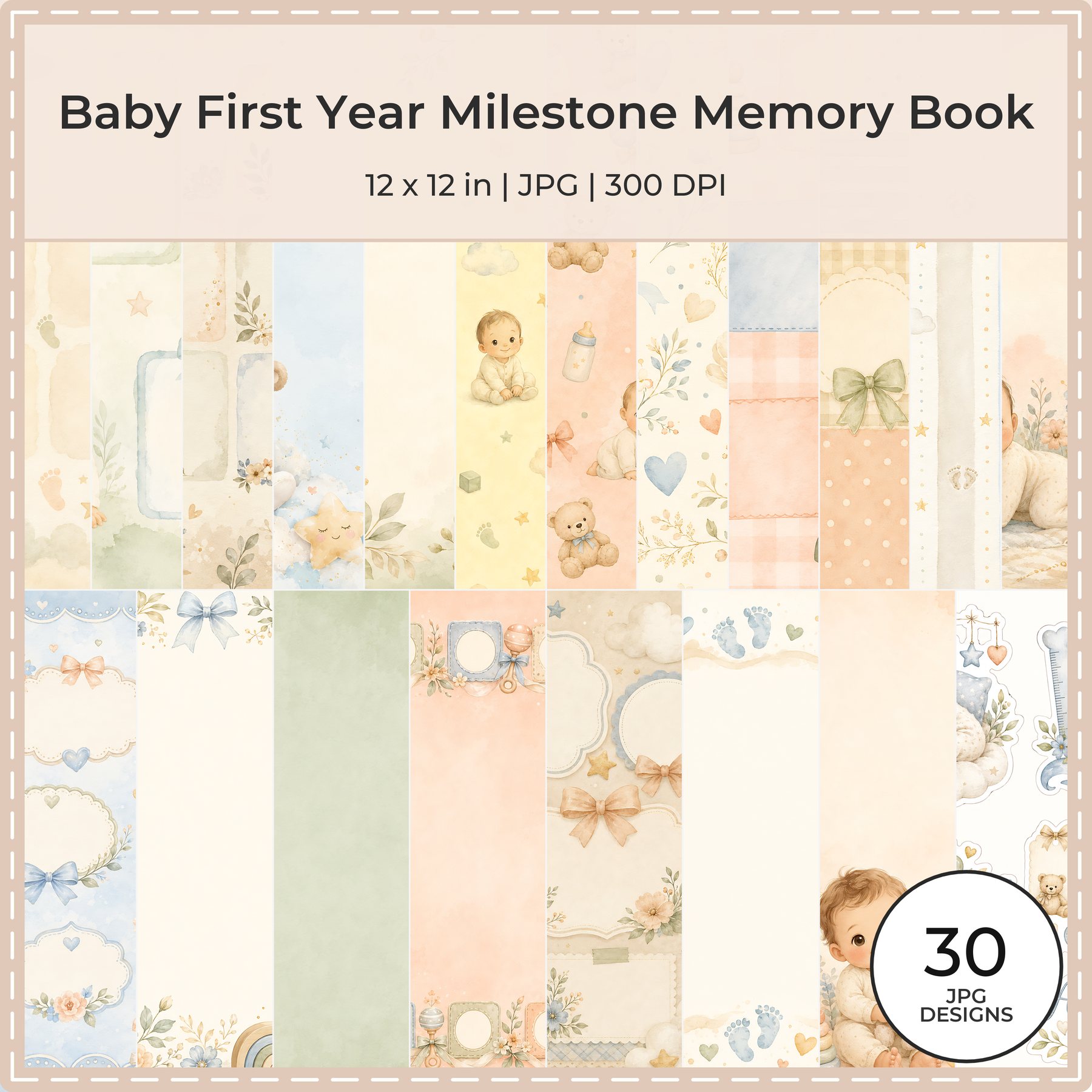
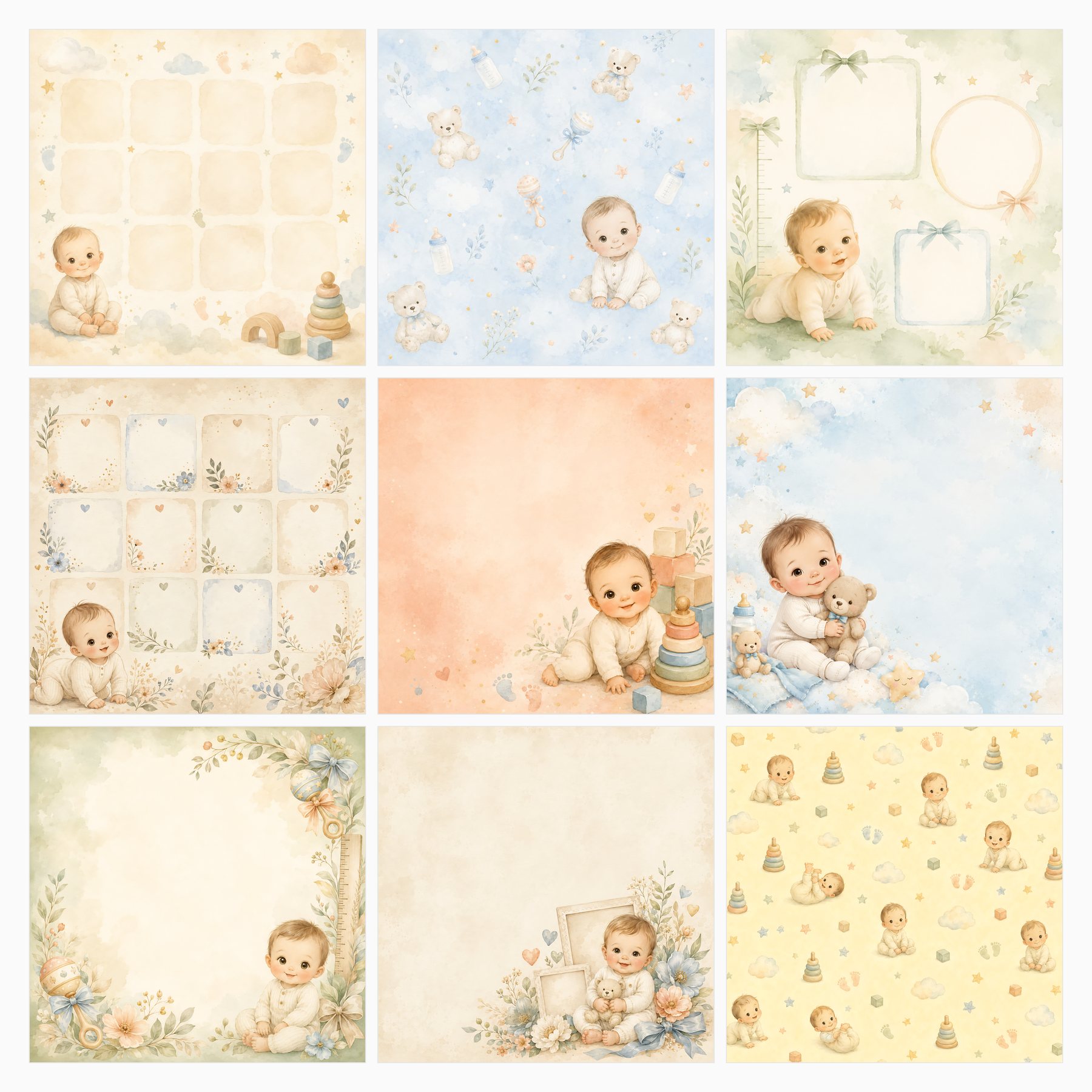
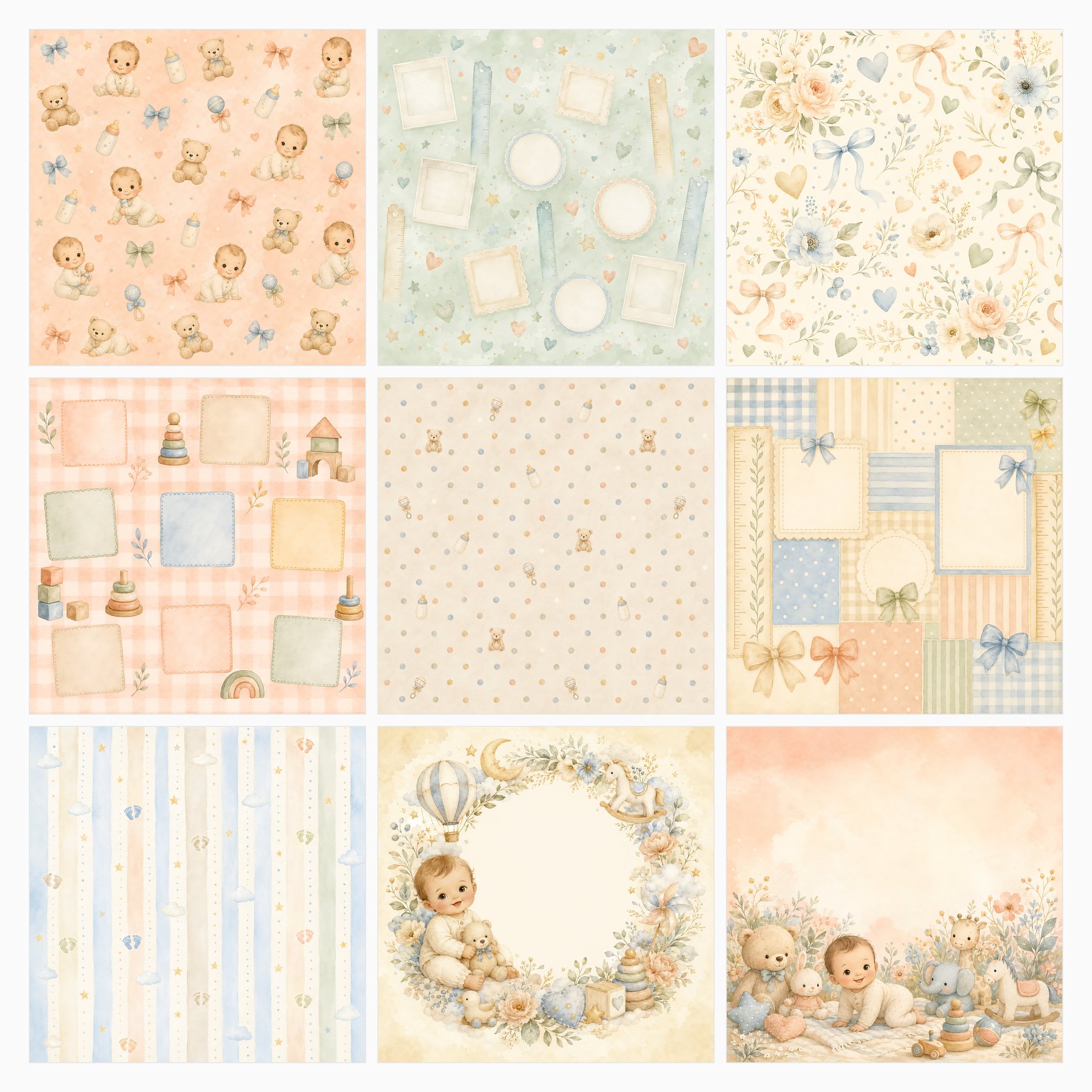
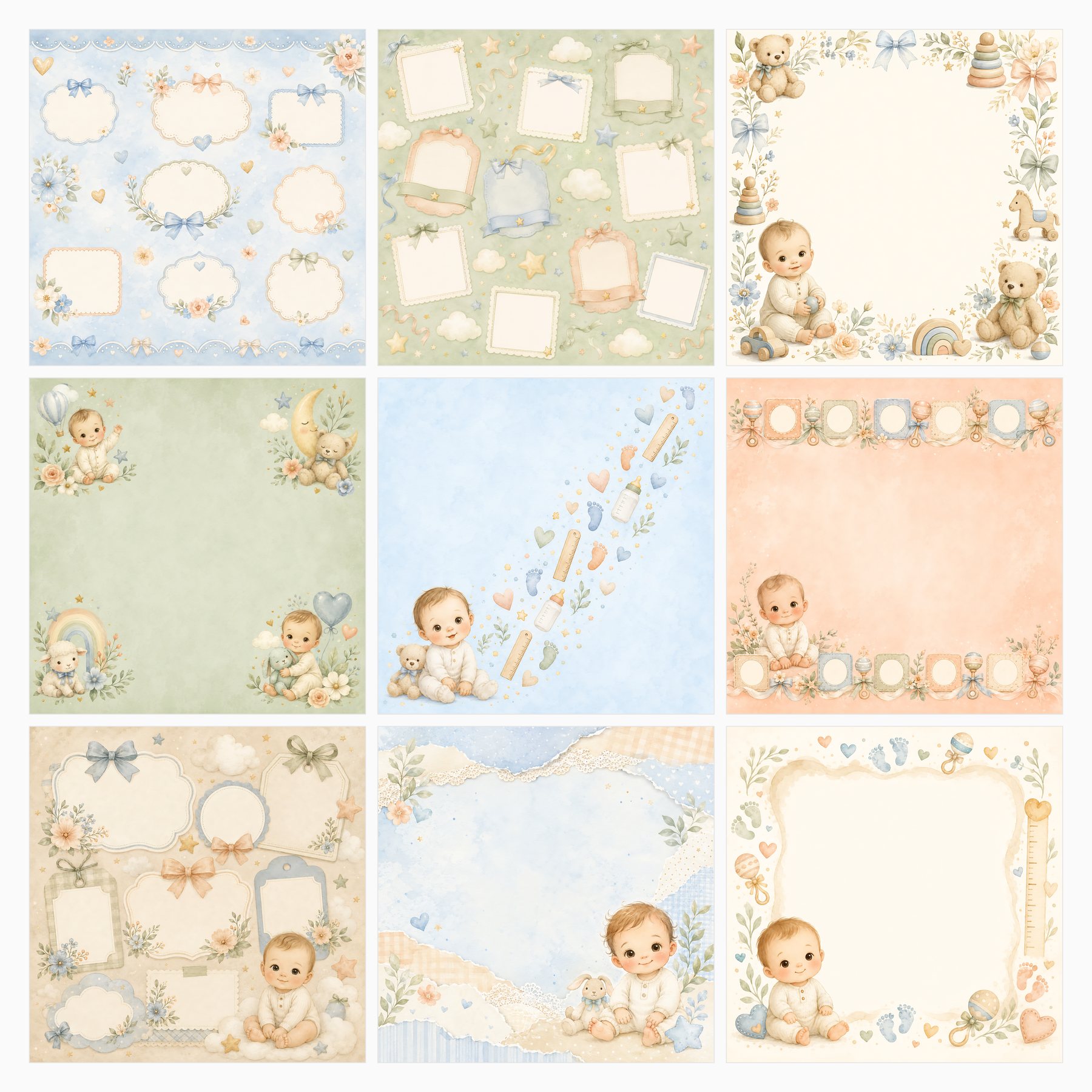
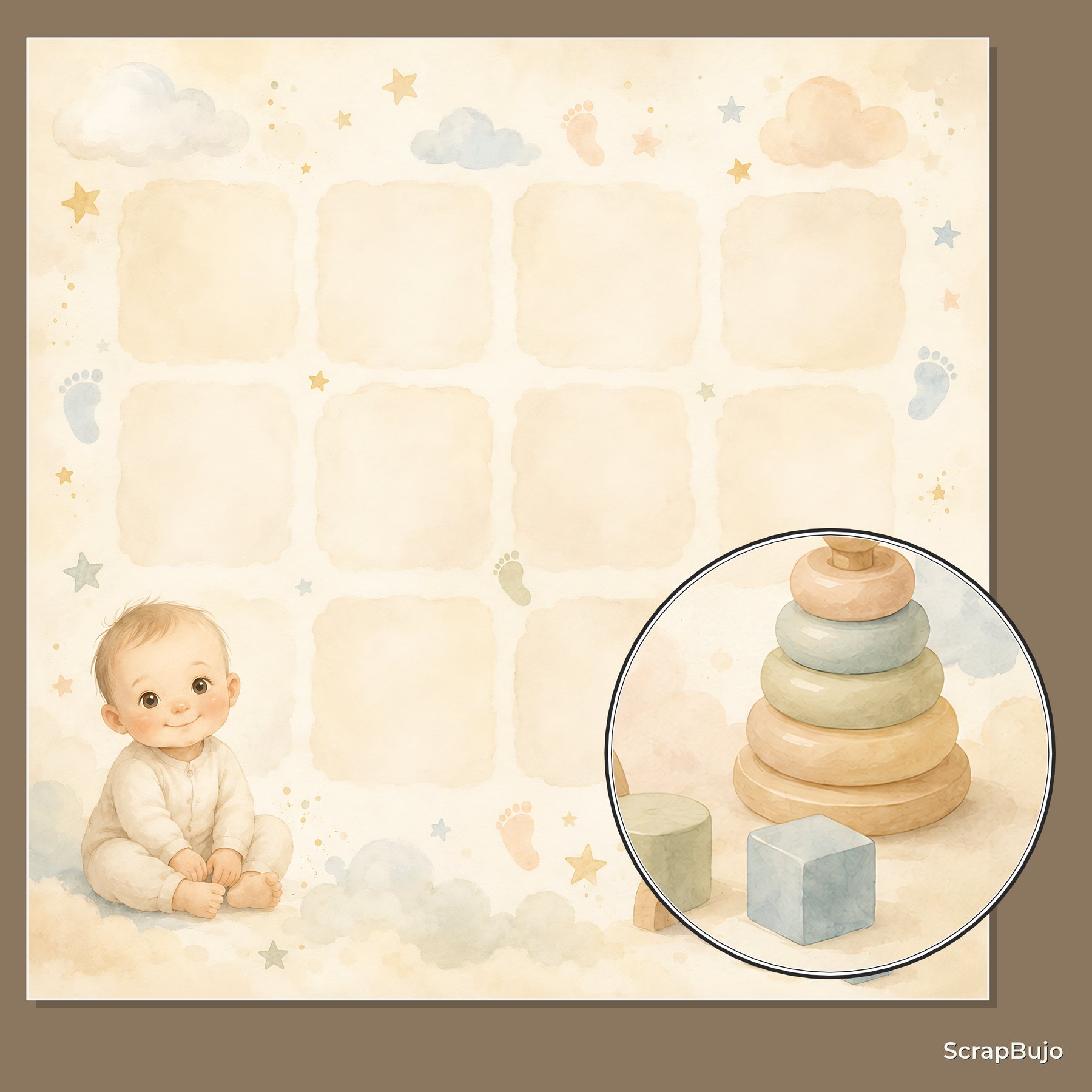
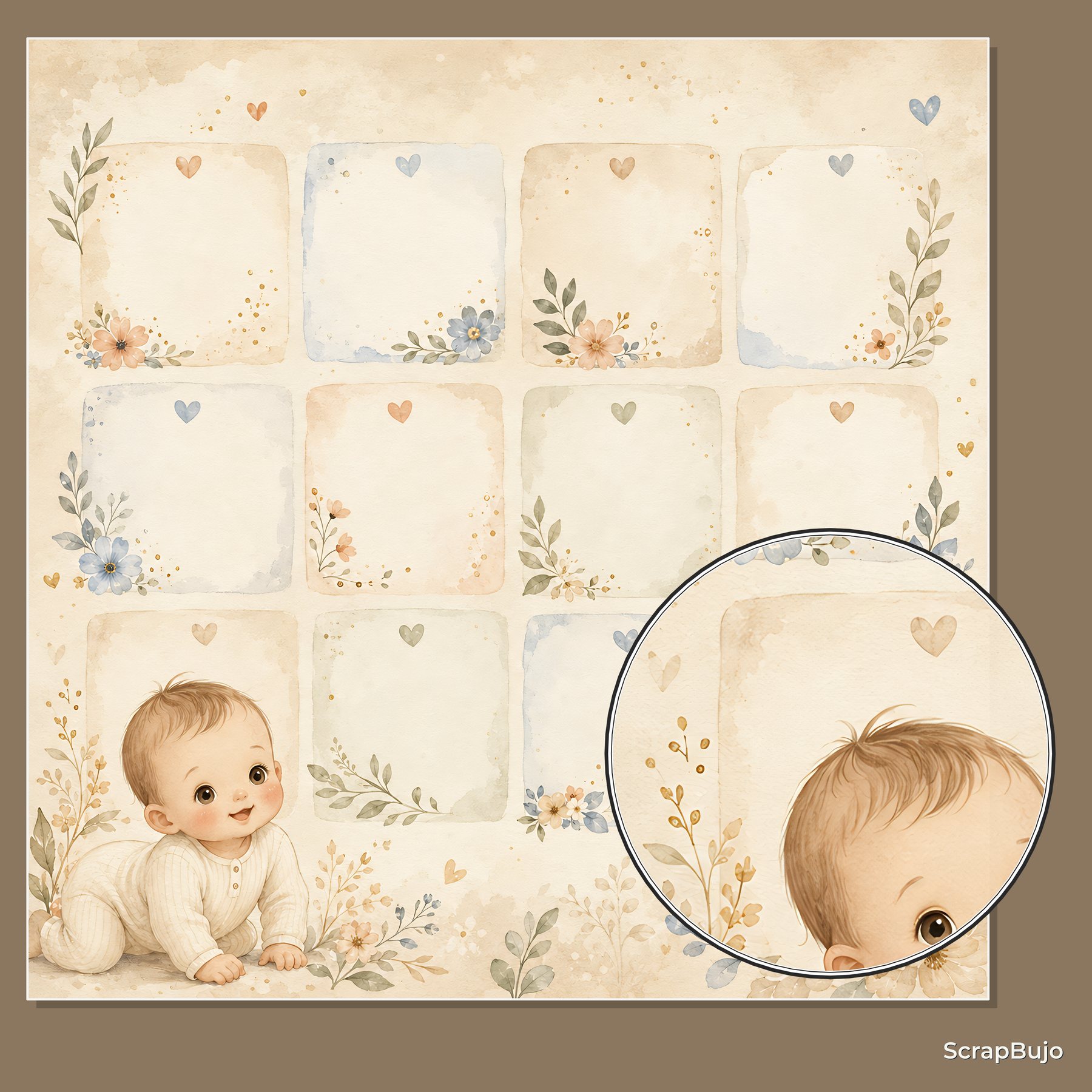
Related free samples: Browse free printable samples before choosing a full pack.
Explore ScrapBujo digital collections
Explore the related digital collection
Review the collection previews and current file details before choosing a format.

12×12 in 300 DPI Digital download
Baby & Nursery
Baby First Year Milestone Memory Book
Four ZIP files contain 30 JPGs: 28 scrapbook papers and two cutout sheets…
Each product page identifies its checkout, current price, and digital delivery details.